Getting Kids in the Garden: Age-by-Age Tips for New Parents
Riley Hofmann
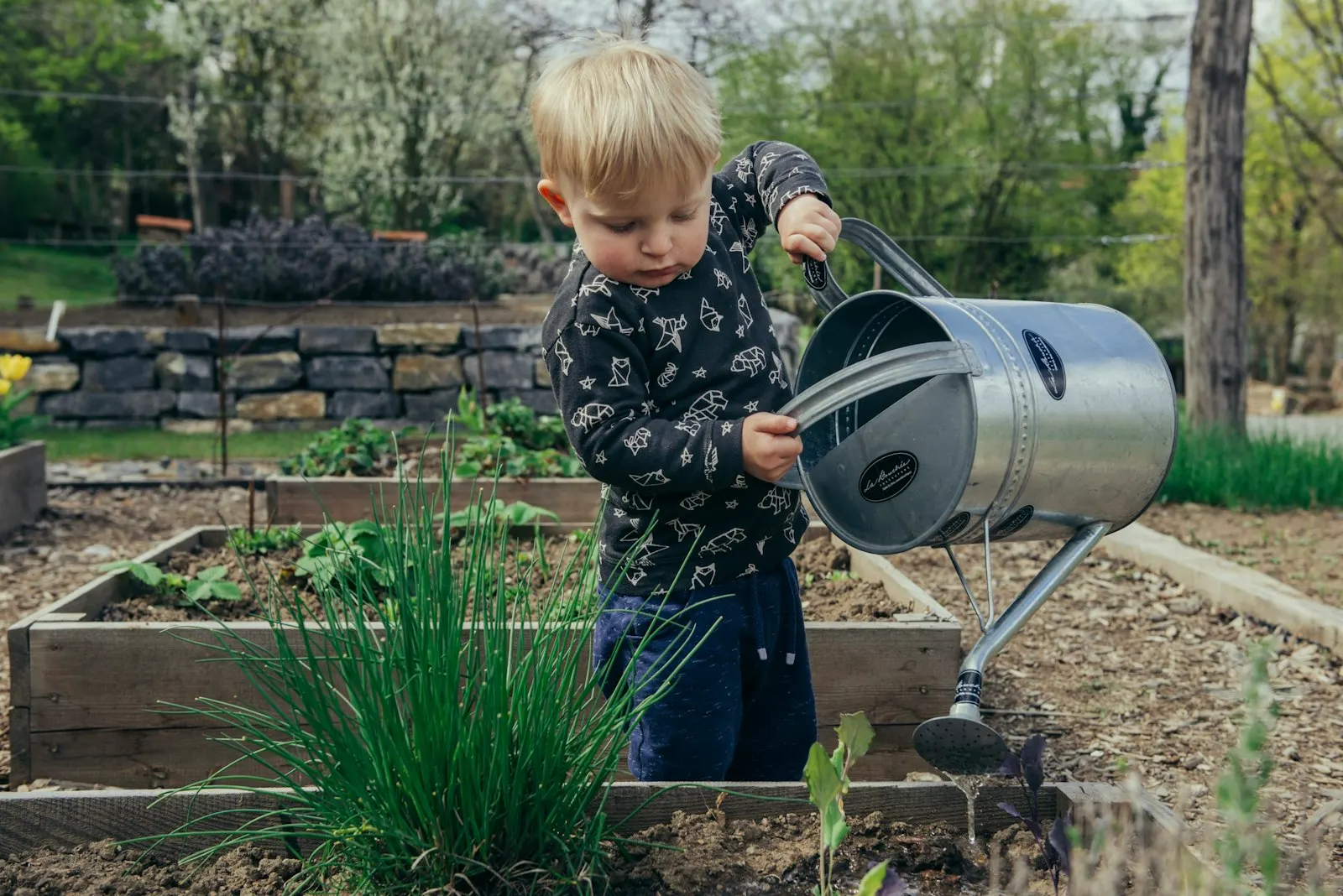
The easiest way to get a kid interested in vegetables is to hand them a trowel, not a vegetable. Kids who help grow food are consistently more willing to actually eat it — Michigan State University Extension has written about that connection between growing something and being willing to try it. The gardening part is almost secondary.
This isn't about running a picture-perfect garden with your kid in it. It's about picking tasks and crops that match what they can actually handle at their age, so nobody ends up frustrated — including you. I don't have kids of my own yet — this comes from watching what's worked in my own beds for my coworkers' kids, plus the research below, not from running this as a parent myself.
Toddlers (2-4): sensory, low-stakes tasks
At this age it's not really about the harvest. It's digging, watering, and touching dirt without getting yelled at for it.
- Watering with a small kid-sized can — expect overwatering, that's fine
- Digging in a dedicated patch that isn't attached to anything you actually need to survive
- Picking ripe cherry tomatoes or snap peas straight off the plant and eating them on the spot
Young kids (5-8): simple ownership tasks
This is the age where "my plant" starts to mean something. Give them one section or a few pots that are actually theirs to plant, water, and check on.
- Planting big, easy seeds they can actually see and handle — beans, sunflowers, pumpkins
- A simple daily or weekly watering job with a reminder, not a lecture
- Counting and measuring — how many radishes came up, how tall the sunflower got this week
Older kids (9+): more real responsibility
By this age they can handle an actual task with a consequence if it's skipped — not as a punishment, just as a real job.
- A crop that's genuinely theirs to plan, plant, and harvest start to finish
- Basic pest-spotting and simple problem-solving — why are the leaves turning yellow?
- Selling or giving away extra harvest, for a small, real sense of the payoff
Best crops for a kid-friendly garden
Pick big, fast, and visual over anything fussy:
- Sunflowers — dramatic, fast, hard to mess up
- Cherry tomatoes — snack straight off the vine, steady producer
- Snap peas — sweet enough to eat raw, climbs a trellis kids like to watch
- Radishes — ready in about a month, good for a short attention span
- Pumpkins — a slow build to one big, satisfying payoff
Realistic expectations
Something is going to get overwatered, stepped on, or picked too early because it looked ready. That's the actual cost of doing this with a kid instead of doing it faster without one, and it's worth it more often than not.
Frequently asked questions
- What's the best first vegetable for a toddler to grow?
- Cherry tomatoes and snap peas are hard to beat — both are ready to eat straight off the plant, no washing or cooking required, and toddlers respond well to instant payoff.
- How do I keep a garden kid-friendly without it turning into chaos?
- Give kids their own defined section or pots instead of the whole garden. It contains the inevitable overwatering and off-schedule picking to one area instead of the crops you're actually counting on.
- Is gardening actually good for kids, or is that just a nice idea?
- There's real research behind it — [Michigan State University Extension](https://www.canr.msu.edu/news/gardening_with_young_children_helps_their_development) and [Iowa State University Extension](https://www.extension.iastate.edu/news/science-parenting-gardening-kids) both cover how gardening supports kids' physical, cognitive, and food-attitude development, not just as a nice bonding activity.
- At what age can kids start helping in the garden?
- As early as 2, with simple sensory tasks like watering and digging. Real ownership over a plant or section usually works better starting around 5-8.
- What if my kid loses interest halfway through the season?
- Normal. Pick fast, visual crops like radishes and sunflowers if attention span is a concern, and don't tie their interest to whether the crop actually succeeds — some seasons it just won't click, and that's fine.